About & History
Who we are, and a short history of the old-time banjo.
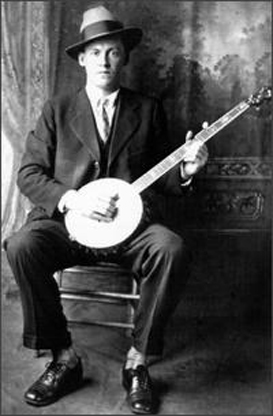
Our mission
The Old-Time Banjo Society is dedicated to preserving, documenting, and teaching the traditional styles of banjo playing that grew up in the mountain and rural communities of the American Southeast. We believe this music belongs to everyone, and that the best way to preserve it is to keep it being played.
A short history of the old-time banjo
The banjo’s ancestors crossed the Atlantic from West Africa, where gourd-bodied, skin-headed lutes had been played for centuries. In the 19th century the instrument took the fretless, open-backed form that would become central to Appalachian string-band music.
Unlike the three-finger “bluegrass” roll popularized in the 1940s, old-time banjo is played in a downward-striking style — variously called clawhammer, frailing, or rapping — in which the back of the fingernail strikes the melody string while the thumb sounds the short fifth string as a rhythmic drone.
- 1830s–1860s: the banjo enters popular American music.
- 1900s–1930s: rural string bands flourish; the first field recordings are made.
- 1960s: the folk revival rekindles interest in traditional styles.
- Today: a worldwide community of players keeps the tradition living and evolving.
How we’re organized
We are a volunteer-led 501(c)(3) nonprofit governed by a small board of directors. Every dollar donated goes directly to workshops, our recording archive, and instrument scholarships.